How rope skipping builds heart health and neuromuscular coordination.
Jumping rope has quietly become one of the most accessible and effective forms of cardiovascular exercise available to people of virtually every age and fitness level. All you truly need is a properly sized rope and a small patch of floor space and suddenly you are equipped with a tool that can torch calories, sharpen coordination and rebuild cardiovascular endurance all at once. The appeal of this ancient activity stretches far beyond its simplicity. Ancient warriors used similar techniques to build agility, mariners aboard ships kept their fitness sharp during long voyages and modern fitness enthusiasts have rediscovered the practice as a time-efficient alternative to hours spent on treadmills and elliptical machines.
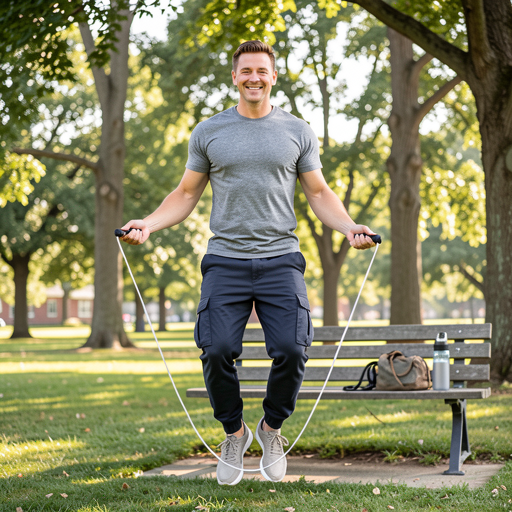
What makes rope skipping particularly compelling is the way it simultaneously challenges multiple systems in the body, forcing the heart, lungs, legs and shoulders to work in concert while demanding sharp mental focus and rhythm. The cardiovascular benefits of consistently practicing the activity are substantial and well documented by sports medicine researchers. A moderate twenty minute session can burn between two hundred and three hundred calories depending on intensity and body weight, which places it in the same efficiency category as running at a moderate pace. However, the low impact nature of the exercise, when performed on an appropriate surface with proper technique, spares the joints from the repetitive pounding that often accompanies running based workouts.
💎
This distinction matters enormously for individuals who want to maintain a challenging aerobic routine without gradually wearing down knee, hip or ankle cartilage. The rhythmic bouncing motion allows the tendons and ligaments in the feet and calves to absorb and release energy efficiently, creating a natural spring that reduces the force transmitted through the skeletal system. Beyond the obvious physical conditioning, learning to jump rope develops neuromuscular coordination and spatial awareness in ways that few other exercises can replicate. The brain must process timing information at a remarkable speed, calculating exactly when the rope reaches the ground and signaling the feet to lift and land with precision.
🚴🏾♀️
This continuous feedback loop strengthens the neural pathways between the motor cortex, cerebellum and peripheral nerves, resulting in improved overall coordination that carries over into sports and daily activities. Boxers have relied on rope skipping for decades as a fundamental training tool precisely because it builds the footwork, timing and endurance that translate directly to performance in the ring. The mental concentration required also provides a form of moving meditation that many practitioners find calming and stress reducing. Getting started with rope training does require some patience and a willingness to embrace early awkwardness.
🌴
Most beginners will tangle the rope, trip frequently and experience a burning sensation in their calves within the first few minutes, but these challenges fade quickly as muscle memory develops. Starting with two foot bounce variations and gradually introducing alternating foot patterns allows the nervous system to adapt without becoming overwhelmed. The investment in a weight loss program, one that spins smoothly with appropriately weighted handles, makes the learning curve noticeably gentler than using a cheap plastic toy from a discount store. Whether the goal is weight loss, athletic performance or simply finding a fun and portable way to stay active, committing time to this timeless practice delivers returns that compound with every session.