Building ankle stability, balance and cardiovascular fitness through low-impact jump rope training and smart progression strategies for injury-free fitness longevity.
Land on the balls of both feet with knees slightly bent as you come down from each jump. This soft, controlled landing is the foundation of proper form and it protects your joints while keeping your movements fluid. You want to keep your legs relatively straight between hops, using your ankles and calves to absorb impact rather than locking out your knees. Keep your arms relaxed at your sides, letting them swing naturally with each rotation of the rope.
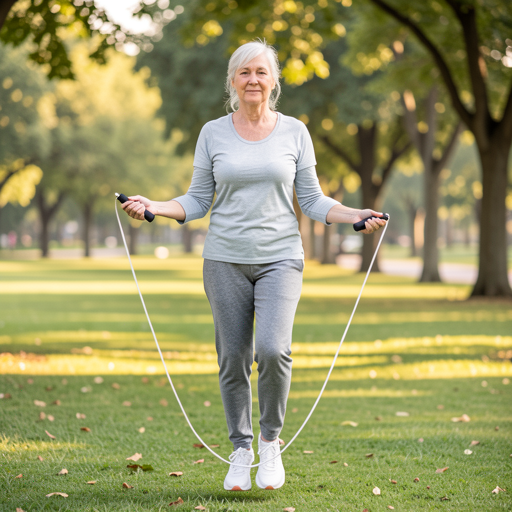
When you're learning to jump rope, beginners often tense their shoulders and raise their elbows too high, which wastes energy and throws off your rhythm. Instead, think of your arms as lightweight levers doing the minimum work necessary to keep the rope moving overhead. Focus on breathing steadily as you move through your workout. Inhale as you step into a position and exhale as your body rises, establishing a rhythm that matches your pace.
⚓
Your arms should hang naturally at your sides throughout the exercise, similar to how a ballet dancer maintains poised, relaxed arms while performing intricate footwork. This posture keeps your chest open and your spine in a neutral position, which makes this exercise much more comfortable over time. Standing tall with your neck and back straight also helps prevent the slouching that many people develop when they get tired, keeping your form clean from the first minute through to the last. If you have any history of back, leg or hip issues, the low-impact nature of this movement makes it an excellent choice for staying active.
🧢
The controlled, bouncing motion strengthens the muscles around your joints without the pounding you get from running on pavement. Each time you land and push off, you're building stability in your ankles, knees and hips while simultaneously improving your balance and coordination. This is why so many people with chronic joint discomfort find that skipping, when done at a comfortable pace, actually feels better than most other forms of cardiovascular exercise. Start with shorter sessions and gradually increase your time as your body adapts to the movement patterns.
🎃
Consistency matters more than intensity when you're building this into your routine. Aim to practice your form regularly, keeping your core engaged and your jumps as light and quiet as possible. The better you get at staying on the balls of your feet, the more efficient your technique becomes and the more you'll enjoy the cardiovascular benefits that come from committing to skipping as a regular part of your fitness schedule. Whether you're working on weight loss, building endurance or simply finding a way to stay active that doesn't aggravate old injuries, the right approach to jump rope will serve you well for years to come.